TRUSTED BY OVER 15,000 FAMILIES SINCE 2001

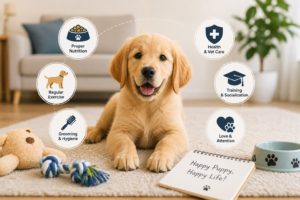
The fastest way to raise a calm, well-behaved Golden Retriever is to combine daily structured exercise, consistent positive-reinforcement obedience training, early socialization, and clear house rules from the day your puppy comes home. Golden Retriever puppies are intelligent and eager to please, so short, frequent training sessions (5–10 minutes, 2–3 times a day) work far better than long, infrequent ones.

Golden Retrievers are famous for their friendly, affectionate nature — but that same enthusiasm can turn into jumping, excessive barking, or restless energy if it isn’t guided early. The good news is that Goldens are one of the most trainable breeds in the world. With the right approach, most owners can raise a dog that is not just obedient, but genuinely calm and easy to live with.

Why Golden Retrievers Need Structured Training Early

Golden Retrievers were bred as working retrievers, which means they carry high energy, strong food drive, and a natural desire to please their humans. Without structure, that energy shows up as jumping on guests, chewing furniture, or pulling on the leash. With structure, that same drive becomes focus, obedience, and calm behavior indoors.

Training should ideally start the moment a Golden Retriever puppy comes home, typically around 8 weeks old. Early training doesn’t mean complex commands — it means teaching the puppy how to settle, how to accept handling, and how to look to you for guidance.

Core Training Tips for a Calm Golden Retriever

  1. Use positive reinforcement, not punishment. Golden Retrievers respond best to rewards — treats, praise, and play — rather than corrections. Punishment-based training tends to increase anxiety and can make a Golden more reactive, not less.
  2. Keep sessions short and consistent. Five to ten minutes of focused training, two or three times a day, keeps a young Golden engaged without overwhelming them. Consistency matters more than duration.
  3. Teach a “settle” or “place” command. This is one of the most underrated tools for calmness. Teaching your dog to go to a mat or bed and relax on cue gives them an off-switch for excitement, especially useful during meals, guests arriving, or family downtime.
  4. Practice impulse control games. Simple exercises like “wait” before meals, “leave it” with treats on the floor, and asking for a sit before opening doors teach a Golden to pause and think rather than react impulsively.
  5. Reward calm behavior, not just commands. Many owners only reward a dog for performing a trick, but calmness itself should be reinforced. If your Golden is lying quietly while you work or relax, quietly acknowledge and reward that behavior.
  6. Be consistent across the household. If one family member allows jumping on the couch and another doesn’t, the dog receives mixed signals. Agree on house rules before the puppy arrives, and make sure everyone enforces them the same way.

Basic Obedience Commands Every Golden Retriever Should Know

A calm, well-behaved Golden Retriever typically knows these foundational cues:

  • Sit – the foundation for most other commands and a default polite greeting behavior
  • Stay – builds patience and impulse control
  • Down – encourages relaxation and is useful for settling in public spaces
  • Come – essential for recall and safety, especially given the breed’s tendency to chase birds or scents
  • Leave it – prevents scavenging and resource guarding issues
  • Place – teaches the dog to go to a designated spot and stay calm there

Training these commands using reward-based methods, such as clicker training or marker-based praise, typically takes a few weeks of daily short sessions for a Golden Retriever to reliably respond, though mastery continues to improve through the first year.

How Much Exercise Does a Golden Retriever Need to Stay Calm?

A common misconception is that more exercise always equals a calmer dog. In reality, unstructured, high-arousal exercise (like nonstop fetch or off-leash chaos at the park) can actually increase excitability. Golden Retrievers generally need 60–90 minutes of exercise daily, but the type matters as much as the amount.

A balanced routine includes physical exercise (walks, swimming, fetch), mental stimulation (puzzle toys, scent games, training sessions), and structured rest. Mental exercise tires a Golden Retriever out just as effectively as physical activity, often with less resulting excitability.

Socialization Tips for a Well-Behaved Golden Retriever

Golden Retrievers are naturally social, but early, positive exposure to new people, dogs, sounds, and environments (ideally between 8 and 16 weeks of age) prevents fearfulness or over-excitement later in life. Aim for controlled, positive experiences rather than overwhelming exposure — short, pleasant interactions build confidence faster than long, chaotic ones.

Common Behavior Problems and How to Fix Them

  • Jumping on people: Turn away and ignore the dog until all four paws are on the ground, then reward calmly. Consistency from every visitor is key.
  • Mouthing or nipping: Redirect to an appropriate chew toy and yelp softly or stop play to signal the behavior ends interaction.
  • Leash pulling: Stop walking the moment the leash tightens, and only move forward when the leash is slack. Golden Retrievers learn this pattern quickly with repetition.
  • Separation anxiety: Build up alone time gradually, starting with a few minutes, and avoid dramatic greetings or goodbyes that heighten emotional arousal.

Frequently Asked Questions

At what age should I start training a Golden Retriever puppy?

Training can begin as soon as a puppy comes home, usually around 8 weeks old, starting with basic name recognition, sit, and gentle handling exercises.

Are Golden Retrievers easy to train?

Yes. Golden Retrievers rank among the most trainable dog breeds due to their intelligence, food motivation, and strong desire to please their owners, making them ideal for positive-reinforcement training.

How long does it take to train a Golden Retriever to be calm?

Most Golden Retrievers show noticeable improvement in calmness within 4–8 weeks of consistent daily training and structured exercise, though full maturity and impulse control typically develop by 2–3 years of age.

What is the best training method for Golden Retrievers?

Positive reinforcement, including reward-based methods like clicker training, is widely considered the most effective and welfare-friendly approach for Golden Retrievers.

If you’re just starting your journey with a Golden Retriever, choosing a healthy, well-socialized puppy from the start makes training significantly easier. The Barking Babies is a trusted puppy pet shop that has helped over 15,000 families across Delhi NCR find their perfect companion since 2001. Every puppy comes with expert breed guidance, a health guarantee, an adoption kit, and ongoing care support — so whether you’re bringing home your first Golden Retriever or adding another furry family member, The Barking Babies makes the start of your training journey calmer, easier, and backed by real expertise. Visit thebarkingbabies.com to explore available puppies and get matched with the right companion for your home.
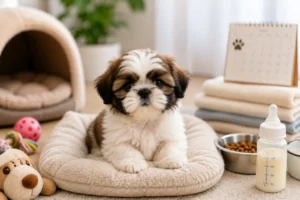

The first 30 days with a Shih Tzu puppy involve four priorities: a safe, quiet space for adjustment, a consistent feeding and potty schedule, gradual socialization, and gentle introduction to grooming and handling. Most puppies take 3-7 days to settle in, begin basic house-training within 2 weeks, and can start light socialization once vaccinations allow (typically after the second round of shots, around 10-12 weeks of age).

Day 1-3: The Adjustment Period

A new Shih Tzu puppy is leaving the only home it has ever known. Expect whimpering, disorientation, and occasional accidents during this window.

What to do:

  • Set up one small, enclosed area (a crate or puppy-proofed room) rather than giving free run of the house
  • Keep the same food brand the breeder or shelter used for the first week to avoid stomach upset
  • Limit visitors and loud noises
  • Let the puppy sleep as much as it wants — Shih Tzu puppies need 18-20 hours of sleep per day

What to expect: Mild diarrhea or loss of appetite in the first 24-48 hours is common and usually resolves as stress decreases. If symptoms persist beyond 48 hours, contact a veterinarian.

Day 4-7: Establishing Routine

By the end of the first week, most puppies begin recognizing feeding times and family members.

Feeding schedule: Shih Tzu puppies under 3 months typically eat 3-4 small meals a day. A common daily total is 1/2 to 1 cup of high-quality puppy food, split across meals — exact amounts depend on the food’s calorie density, so follow the label or your vet’s guidance.

Potty training basics:

  • Take the puppy out immediately after waking, after eating, and every 1-2 hours during the day
  • Use the same door and phrase each time (“outside” or “let’s go”)
  • Reward successful outdoor elimination within 5 seconds with a treat and praise

Sleep setup: A crate near the owner’s bed for the first week reduces nighttime whining, since Shih Tzus are companion dogs prone to separation distress.

Day 8-14: First Vet Visit and Health Checks

Most new owners schedule the first veterinary appointment during this window if it hasn’t happened already.

What the vet typically checks:

  • Weight and growth trajectory
  • Deworming schedule (usually started by the breeder at 2-3 weeks, continued every 2-3 weeks until 12 weeks)
  • Vaccination timeline (the second round of the DHPP series generally falls around week 9-11)
  • Signs of common Shih Tzu health concerns: eye irritation (due to shallow eye sockets), breathing patterns (due to their brachycephalic, or short-nosed, structure), and knee joint stability

Grooming introduction: Begin short, positive grooming sessions now — brushing for 2-3 minutes daily and gently touching paws, ears, and mouth — so the puppy associates handling with treats rather than stress before its coat gets longer and matting becomes a risk.

Day 15-21: Building Confidence and Habits

By week three in the home, house-training should show clear progress, though full reliability often takes 3-4 months total.

Behavioral milestones to expect:

  • Fewer accidents, especially during the day
  • Recognizing its name
  • Following the owner between rooms (a normal sign of attachment, not necessarily “clinginess”)
  • Beginning to chew — teething typically starts around this age, so appropriate chew toys prevent damage to furniture and shoes

Socialization guidance: Full outdoor socialization (dog parks, walks in public areas) should wait until the vaccination series is complete, usually around 14-16 weeks. In the meantime, controlled exposure — carrying the puppy on short outings, introducing it to vaccinated adult dogs, and exposing it to new sounds — supports healthy development without infection risk.

Day 22-30: Settling Into a Predictable Life

By the end of the first month, most Shih Tzu puppies have a recognizable daily rhythm: wake, potty, eat, play, nap, repeat.

Signs the puppy has adjusted well:

  • Sleeping through most of the night with minimal whining
  • Eating consistently at each mealtime
  • Coming when called for treats or play
  • Showing curiosity rather than fear toward new objects or people in the home

Common challenges still present at day 30:

  • Occasional potty accidents, especially with excitement or during play
  • Teething-related chewing
  • Some resistance to grooming tools, which typically improves with repeated positive exposure

Frequently Asked Questions

How much should a Shih Tzu puppy sleep in the first month?

Between 18 and 20 hours a day, similar to most toy-breed puppies. This is normal and supports brain and bone development.

When can a Shih Tzu puppy go outside?

Supervised, private-yard time can start immediately. Public spaces with unknown dogs should wait until the full vaccination series is complete, generally around 14-16 weeks.

How often should a Shih Tzu puppy eat in the first 30 days?

Three to four small meals daily is standard for puppies under 3 months, since their small stomachs and fast metabolisms make infrequent large meals harder to digest.

Is it normal for a Shih Tzu puppy to cry at night during the first week?

Yes. This is typically separation-related and improves as the puppy bonds with its new environment, usually within 3-7 nights.

What health issues should new owners watch for?

Eye irritation, breathing difficulty in heat or after exercise, and signs of hypoglycemia (weakness, trembling) are the most common early concerns in the breed due to its facial structure and small size.

Key Takeaway

The first 30 days of Shih Tzu puppy care center on stability: consistent feeding times, a predictable potty routine, gentle grooming exposure, and patience during the adjustment period. Full house-training and socialization extend well beyond day 30, but a puppy that eats on schedule, sleeps well, and shows curiosity by the end of the first month is generally on a healthy developmental track. When in doubt about symptoms or behavior, a veterinarian remains the most reliable source for individualized guidance.

For new Shih Tzu owners who want extra support beyond the basics, The Barking Babies offers breed-specific guides, product recommendations, and community tips tailored to small and toy breeds. Whether you’re looking for grooming advice suited to a Shih Tzu’s long coat, training tricks for stubborn puppies, or a checklist to prep your home before pickup day, thebarkingbabies.com is a helpful resource to bookmark alongside your vet’s guidance during those first crucial weeks.

If you want a low-shedding puppy, the Maltese, Toy Poodle, and Maltipoo are three of the best options available. All three have hair rather than a double coat of fur, which means they shed minimally and are often better tolerated by people with mild allergies. The Toy Poodle sheds the least of the three, followed closely by the Maltipoo, with the Maltese requiring the most regular brushing to prevent matting.

Why Some Dogs Shed Less Than Others

Shedding comes down to coat type. Most dogs have a double coat — a soft undercoat and a coarser topcoat — that sheds seasonally to regulate body temperature. Low-shedding breeds like the Maltese and Poodle instead grow hair continuously, similar to human hair. This hair falls out far less often, and when it does, it tends to get caught in the surrounding coat rather than falling onto furniture and clothing.

Low-Shedding Dog Breeds -Maltese, Toy Poodle, and Maltipoo

This is why hair-coated breeds are often marketed as “hypoallergenic.” No dog is 100% allergen-free — allergens come from dander, saliva, and urine, not just hair — but less shedding does mean less hair carrying dander around your home, which can reduce allergy symptoms for many people.

1. Maltese: The Classic Toy Companion

Shedding level: Low Best for: Apartment dwellers, first-time toy breed owners, families wanting a lap dog

The Maltese is a small, silky-coated breed with a long history as a companion dog. Adults typically weigh between 4 and 7 pounds, making them ideal for small living spaces.

Key traits:

  • Affectionate, gentle, and thrives on human companionship
  • Long, white, single-layer coat that sheds very little
  • Requires daily brushing to prevent tangles and matting
  • Can be prone to separation anxiety if left alone too long
  • Lifespan of 12–15 years

Grooming needs: The Maltese’s flowing coat looks stunning but needs consistent upkeep. Many owners keep the coat trimmed short (“puppy cut”) for easier maintenance rather than growing it out to full length.

2. Toy Poodle: The Low-Shedding Standout

Shedding level: Very low Best for: Allergy-sensitive households, active owners, anyone wanting a highly trainable dog

The Toy Poodle is widely considered one of the lowest-shedding breeds that exists. Standing under 10 inches tall and weighing 4–6 pounds, they combine intelligence with a dense, curly coat that traps loose hair instead of releasing it.

Key traits:

  • Extremely intelligent and easy to train
  • Curly, dense coat that sheds minimally
  • Needs professional grooming every 4–6 weeks
  • Energetic and enjoys mental stimulation, not just walks
  • Lifespan of 12–15 years

Grooming needs: Because the coat doesn’t shed, loose hair stays trapped and can mat if not brushed several times a week. Regular grooming appointments are essential, not optional.

3. Maltipoo: The Best of Both Worlds

Shedding level: Low to very low Best for: Families wanting a designer breed with a friendly, adaptable temperament

A cross between the Maltese and Toy (or Miniature) Poodle, the Maltipoo has become one of the most popular designer dog breeds in the U.S. Weight typically ranges from 5 to 15 pounds depending on the poodle parent size.

Key traits:

  • Friendly, playful, and adaptable to apartments or houses
  • Coat can range from wavy to curly, usually low-shedding
  • Generally good with children and other pets
  • Combines Poodle intelligence with Maltese affection
  • Lifespan of 12–15 years

Grooming needs: Because Maltipoos are a mixed breed, coat texture can vary even within the same litter. Regular brushing (2–3 times per week) and grooming every 6–8 weeks keeps the coat manageable.

Comparison Table

Breed Shedding Size Grooming Frequency Best For
Maltese Low 4–7 lbs Daily brushing Lap dog lovers, small spaces
Toy Poodle Very low 4–6 lbs Brushing + grooming every 4–6 weeks Allergy-sensitive owners, trainability
Maltipoo Low–very low 5–15 lbs Brushing + grooming every 6–8 weeks Families, adaptable temperament

Frequently Asked Questions

Which of these three breeds sheds the least?

The Toy Poodle sheds the least of the three, thanks to its dense, curly, continuously growing coat.

Are Maltese, Toy Poodle, or Maltipoo dogs truly hypoallergenic?

No dog is completely hypoallergenic. All three breeds produce less loose hair than double-coated breeds, which can reduce allergen spread, but people with severe allergies should spend time with the specific breed before committing.

Which breed is easiest for a first-time owner?

The Maltipoo is often recommended for first-time owners because it combines the Poodle’s trainability with the Maltese’s affectionate, easygoing nature.

Do low-shedding dogs still need grooming?

Yes. Low-shedding does not mean low-maintenance. Because loose hair doesn’t fall out on its own, it must be removed through regular brushing and professional grooming to prevent painful matting.

Which breed is best for small children?

The Maltipoo tends to be the most adaptable and tolerant around children, though all three breeds are small and can be injured by rough play, so supervision is recommended regardless of breed.

How much exercise do these breeds need?

All three are low-to-moderate energy breeds. A daily walk plus some indoor playtime is generally sufficient for the Maltese and Maltipoo, while the Toy Poodle benefits from added mental enrichment due to its high intelligence.

Final Thoughts

The Maltese, Toy Poodle, and Maltipoo each offer a low-shedding coat paired with a small size and affectionate temperament, making them excellent choices for apartment living, allergy-conscious households, or anyone who wants a companion dog without constant vacuuming. Your best choice ultimately depends on how much grooming time you’re willing to commit and whether you prioritize trainability (Toy Poodle), classic elegance (Maltese), or an adaptable family temperament (Maltipoo).

If you’re ready to bring one of these low-shedding companions home, The Barking Babies is a great place to start your search. The site connects prospective owners with Maltese, Toy Poodle, and Maltipoo puppies, along with guidance on choosing a reputable breeder and what to expect during the adoption process. Whether you’re looking for a fluffy lap companion or an intelligent, trainable pup, The Barking Babies makes it easy to find a healthy, well-socialized puppy that fits your lifestyle.

Choosing the right small dog for your family is an exciting decision, but it can also be a little overwhelming. Two popular breeds that often come up in this discussion are the Maltipoo and the Toy Poodle. Both are adorable, intelligent, affectionate, and well-suited to compact homes and apartments. However, they do have important differences in temperament, grooming needs, energy levels, and family compatibility.

Maltipoo vs Toy Poodle: Which Small Dog Is Better for Families?

If you’re trying to decide between a Maltipoo and a Toy Poodle for your household, this guide will help you understand the strengths and challenges of each breed so you can make the best choice for your family.

What Is a Maltipoo?

A Maltipoo is a designer dog breed created by crossing a Maltese with a Poodle, usually a Toy or Miniature Poodle. Because of this mix, Maltipoos often inherit the affectionate and playful nature of the Maltese, along with the intelligence and low-shedding coat traits of the Poodle.

Maltipoos are known for being sweet, social, and very people-oriented. They tend to thrive in homes where they receive plenty of attention and companionship. Their fluffy coats and teddy-bear appearance make them especially popular with families looking for a small, charming companion dog.

What Is a Toy Poodle?

A Toy Poodle is the smallest variety of the Poodle breed. Despite their tiny size, Toy Poodles are highly intelligent, elegant, and surprisingly athletic. They were originally bred as companion dogs and have long been admired for their trainability and graceful temperament.

Toy Poodles are purebred dogs, which means their traits are generally more predictable than those of mixed breeds. They are often considered one of the smartest dog breeds in the world, making them excellent family pets for owners who want a trainable and responsive dog.

Temperament: Which Dog Fits Family Life Better?

When it comes to personality, both breeds can be wonderful family companions, but there are some differences.

Maltipoo Temperament: Maltipoos are affectionate, cheerful, and playful. They usually love being around children and adults alike. Because they are mixed breeds, their temperament can vary depending on which parent they take after more strongly. Some Maltipoos are more energetic and bouncy, while others are calmer and more cuddly.

They typically enjoy lap time, short play sessions, and being included in everyday family activities. Maltipoos can be very loving dogs, but they may also be sensitive and may not tolerate rough handling well, which is something to consider if you have very young children.

Toy Poodle Temperament: Toy Poodles are smart, alert, loyal, and eager to learn. They often bond closely with their families and can be excellent with respectful children. Because of their intelligence, they usually pick up commands quickly and enjoy mental challenges.

Toy Poodles may be slightly more reserved than Maltipoos at first, especially with strangers, but they usually warm up once they feel comfortable. They can adapt well to family life and are often a great choice for households that want a dog with both elegance and brains.

Size and Exercise Needs

Since both breeds are small, they are suitable for apartments, smaller homes, and urban living. But they still need regular activity.

Maltipoo Exercise Needs

Maltipoos usually need moderate exercise. A couple of short walks a day, some indoor play, and mental stimulation are enough for many of them. They enjoy games, toys, and time with family members.

Because of their small size, they generally do not require long outdoor workouts. However, they do need daily engagement to prevent boredom and destructive behaviors.

Toy Poodle Exercise Needs

Toy Poodles also have moderate exercise needs, but they may be a little more energetic and eager for structured play. They benefit from walks, fetch, training sessions, and puzzle toys.

Toy Poodles often enjoy learning tricks, obedience games, and activities that keep their minds busy. Without enough stimulation, they may become restless.

Grooming and Maintenance

Grooming is one of the biggest considerations when choosing between these two breeds.

Maltipoo Grooming

Maltipoos often have soft, wavy, or curly coats. Depending on which parent they resemble, their coat may need regular brushing to prevent tangles and matting. They are usually low-shedding, but their coat still needs maintenance.

Many Maltipoo owners opt for professional grooming every 4 to 6 weeks. Their facial hair, ears, and paws also require routine cleaning and trimming.

Toy Poodle Grooming

Toy Poodles also have curly, low-shedding coats that require consistent grooming. In fact, Poodles often need slightly more structured grooming because their coats grow continuously.

They need frequent brushing and regular professional grooming to keep their coat healthy and neat. On the plus side, their coat is often more predictable than that of a mixed breed like the Maltipoo.

Trainability and Intelligence

Both breeds are intelligent, but Toy Poodles are generally considered easier to train because of their purebred background and strong working-dog intelligence.

Maltipoo Training

Maltipoos are smart, but training results can vary depending on whether they inherit more of the Maltese’s independence or the Poodle’s eagerness to learn. They usually do best with positive reinforcement, consistency, and patience.

Toy Poodle Training

Toy Poodles are highly trainable and excel at obedience, trick training, and housebreaking when trained early. They are quick learners and often enjoy the challenge of training.

Compatibility with Children

This is one of the most important questions for families.

Maltipoo with Children

Maltipoos are gentle and affectionate, which makes them good companions for children who know how to handle a small dog carefully. Because of their delicate size, they are not ideal for very rough play or toddlers who might accidentally injure them.

Toy Poodle with Children

Toy Poodles can also be excellent with children, especially if the children are calm, respectful, and taught proper dog handling. Their intelligence makes them responsive and adaptable, but they are still small and somewhat fragile.

Health and Lifespan

Both breeds are small and generally long-lived, but they may have some health concerns.

Maltipoo Health

Because Maltipoos are mixed breeds, they can benefit from hybrid vigor, but they may also inherit health issues from either parent breed. Common concerns can include dental problems, patellar luxation, and eye issues.

Toy Poodle Health

Toy Poodles are generally healthy but can also be prone to dental issues, knee problems, and certain hereditary eye conditions. Regular vet visits and preventive care are important.

Which One Is Better for Families?

The answer depends on your family’s lifestyle.

Choose a Maltipoo if you want:

  • A very affectionate and cuddly dog
  • A playful companion with a sweet, soft personality
  • A dog that often loves being around people all the time
  • A charming pet with a teddy-bear look

Choose a Toy Poodle if you want:

  • A highly intelligent and trainable dog
  • A breed with a more predictable temperament
  • A small pet that responds well to structure
  • A companion that thrives on mental stimulation

Final Thoughts

Both the Maltipoo and Toy Poodle are fantastic small dogs for families, but they shine in slightly different ways. The Maltipoo is often the more cuddly, affectionate, and casual companion, while the Toy Poodle is typically the more intelligent, trainable, and polished family pet.

If your family values a dog that loves constant companionship and playful affection, the Maltipoo may be your best match. If you want a smart, graceful, and highly responsive little dog, the Toy Poodle could be the perfect fit.

Whichever you choose, both breeds can bring a lot of joy, love, and energy into your home. The key is finding the dog whose personality best matches your family’s routine, experience, and lifestyle.

The Barking Babeis – Delhi’s trusted puppy pet shop, where families find happy, healthy, and adorable companions to bring home.

Golden Retriever puppies are loving, playful, and full of personality. They are also curious, energetic, and need steady care to grow into healthy adult dogs.

If you are a first-time owner, this guide will help you understand what your puppy needs in the early months. With the right routine, your Golden Retriever can become a happy and well-behaved part of your family.

Getting Ready for Your Golden Retriever Puppy

Before you buy golden retriever puppy for sale and bring it home, make sure your space is safe and comfortable. A little preparation can make the first few days much easier for both you and your puppy.

You do not need fancy supplies, but you do need the basics. A calm, organized setup helps your puppy settle in with less stress.

Puppy Essentials Checklist

  • Food and water bowls
  • High-quality puppy food
  • Soft bed or crate
  • Leash and collar
  • Chew toys
  • Puppy-safe cleaning supplies
  • Brush and grooming tools
  • Puppy pads, if needed

It is also a good idea to remove anything dangerous from floor level. Puppies love to chew, sniff, and explore every corner.

Feeding Your Golden Retriever Puppy

Good nutrition is one of the most important parts of puppy care. Golden Retriever puppies grow fast, so they need food that supports healthy bones, muscles, and energy.

Choose a puppy formula made for growing dogs. Ask your vet if you are not sure which food is best for your puppy’s age and size.

Most young puppies eat 3 to 4 meals a day. As they get older, they usually move to 2 meals a day.

Simple Feeding Schedule of Golden Retriever

Puppy Age Meals Per Day Notes
8 to 12 weeks 4 Small meals help with digestion
3 to 6 months 3 Keep a regular routine
6 to 12 months 2 Follow your vet’s advice

Try not to overfeed, even if your puppy acts hungry all the time. Healthy growth is better than rapid growth.

Feeding at the same times each day also helps with house training. Dogs do better when their routine stays predictable.

House Training Your Golden Retriever Puppy

House training takes patience, but Golden Retrievers usually learn well with a routine. The key is to take your puppy outside often and reward good behavior right away.

Take your puppy out after sleeping, playing, drinking, and eating. Use the same potty spot each time so your puppy begins to understand what is expected.

House Training Steps

  1. Take your puppy outside first thing in the morning.
  2. Go outside after every meal, nap, and play session.
  3. Wait in the same spot each time.
  4. Praise your puppy immediately after they go.
  5. Clean indoor accidents quickly and calmly.

Never punish your puppy for accidents. They learn best from consistency, praise, and repetition.

Socialization Starts Early

Socialization means helping your puppy feel comfortable with the world around them. This includes new people, sounds, places, and other animals.

A well-socialized puppy is usually more confident, calm, and friendly as an adult. Start slowly and make each new experience positive.

Easy Socialization Ideas

  • Invite calm visitors over
  • Let your puppy hear everyday home sounds
  • Introduce safe outdoor spaces
  • Expose your puppy to different surfaces
  • Meet friendly dogs after vet approval

Keep each session short. A few good experiences are more helpful than one big, stressful one.

Training Your Golden Retriever Puppy

Golden Retrievers are smart and eager to please, which makes them wonderful to train. Start with simple commands and short lessons that feel like play.

Use treats, praise, and a happy voice. Training should always feel positive, not scary or frustrating.

Golden puppies usually learn quickly when you keep things simple. If you repeat the same commands every day, your puppy will begin to understand what you want.

Best First Commands

  • Sit
  • Stay
  • Come
  • Leave it
  • Down

Keep training sessions short, about 5 to 10 minutes. Puppies learn best when they are focused but not tired.

Exercise and Play for Growing Puppies

Golden Retriever puppies are active, but they should not do too much exercise too soon. Their bodies are still growing, so gentle activity is best.

Short walks, soft toys, and light play are enough for most young puppies. Avoid long runs or lots of jumping while they are still developing.

A good balance of play and rest helps your puppy stay healthy. Too much activity can lead to tiredness and strain.

Safe Activities for Puppies

  • Short leash walks
  • Fetch with a soft toy
  • Tug games with simple rules
  • Puzzle toys
  • Indoor training games

Your puppy does not need intense exercise to be happy. What they need most is steady interaction, mental activity, and a safe place to rest.

Grooming Your Golden Retriever Puppy

Golden Retrievers have beautiful coats that need regular care. Starting grooming early helps your puppy get used to brushing and handling.

Brush your puppy several times a week to remove loose hair and prevent tangles. This is also a good time to check ears, paws, and nails.

Grooming Routine

  • Brush coat: 2 to 3 times a week
  • Check ears: weekly
  • Trim nails: every few weeks
  • Brush teeth: several times a week
  • Bathe: only when needed

Make grooming calm and positive. A few treats and gentle praise can turn it into a routine your puppy enjoys.

Vet Care and Health Checks

Your puppy should visit the vet soon after coming home. Regular checkups help you stay on top of vaccinations, parasite prevention, and overall health.

Your vet can also guide you on diet, weight, and growth. Follow the vaccination schedule closely to help protect your puppy from serious illnesses.

Vet Visit Checklist

  • First puppy exam
  • Vaccination plan
  • Deworming schedule
  • Flea and tick prevention
  • Microchip discussion
  • Growth and nutrition advice

A healthy start gives your puppy the best chance to grow into a strong adult dog.

Common Mistakes to Avoid

First-time owners often make a few simple mistakes. Learning what to avoid can make the puppy stage much easier.

One common mistake is expecting too much too soon. Puppies need time to learn, and progress usually comes in small steps.

Another mistake is being inconsistent. If rules change every day, your puppy gets confused.

Watch Out For These Mistakes

  • Skipping routines
  • Overfeeding treats
  • Using harsh corrections
  • Waiting too long to train
  • Not socializing early
  • Expecting too much too fast

Golden Retriever puppies need patience and consistency. They improve quickly when you give them structure and positive attention.

Daily Care at a Glance

Area What to Do
Food Feed quality puppy food on schedule
Water Keep fresh water available
Training Practice short lessons every day
Exercise Use gentle play and short walks
Grooming Brush regularly and check ears/nails
Health Stay on track with vet visits

This simple routine helps your puppy feel safe and loved. It also makes daily care easier for you.

Final Thoughts

Raising a Golden Retriever puppy is a big responsibility, but it is also a wonderful experience. With good food, regular training, early socialization, and gentle care, your puppy can grow into a loyal and happy companion.

The most important thing is consistency. Small daily efforts build strong habits and help your puppy feel secure.

About The Barking Babies

At The Barking Babies, we know how exciting and overwhelming puppy parenthood can feel, especially for first-time owners. That is why we create helpful, easy-to-follow pet advice that supports you through every stage of your dog’s journey. Visit www.thebarkingbabies.com for more trusted tips, practical guides, and puppy-loving content designed to help you raise a happy, healthy companion with confidence.


Instagram
Phone
Phone
Instagram