TRUSTED BY OVER 15,000 FAMILIES SINCE 2001

Choosing a puppy is exciting, but it’s also a decision that will shape your daily routine, home life, travel plans, and budget for years to come. One of the biggest factors to think about is dog size. Small, medium, and large breed puppies can all make wonderful companions, but they often come with very different care needs, energy levels, space requirements, and long-term costs.

If you’re trying to figure out which puppy is right for you, this guide will help you compare small, medium, and large breed dogs in a practical way so you can choose the best fit for your lifestyle.

Why Puppy Size Matters More Than You Think

Many first-time dog owners focus on cuteness, personality, or breed popularity. Those things matter, of course, but size can affect almost every part of dog ownership.

A puppy’s eventual adult size influences:

  • How much space they need
  • How much food they eat
  • How easy they are to travel with
  • What kind of exercise they need
  • How manageable they are in small homes or apartments
  • Veterinary costs and supplies
  • Training and handling challenges

A tiny puppy may seem easier at first, but some small breeds can be surprisingly energetic or vocal. A large puppy may be more laid-back in adulthood, but it can also become a powerful, boisterous dog that requires consistent training. Medium breeds often strike a balance, but they are not always “easier” by default.

The key is to match the dog’s size and temperament to your real life, not just your preference.

Small Breed Puppies: Best for Compact Living and Close Companionship

Small breed puppies usually grow into dogs under about 20 pounds, though the exact range varies by breed. Popular examples include Chihuahuas, Pomeranians, Maltese, Shih Tzus, Dachshunds, and Yorkshire Terriers.

Advantages of Small Breed Puppies

  1. Ideal for apartments and small homes
    Small dogs usually need less physical space, making them a good choice for city apartments, condos, or homes without large yards.
  2. Easier to transport
    Whether you’re going on a road trip, visiting the vet, or bringing your dog along to pet-friendly places, a small dog is generally easier to carry and manage.
  3. Lower food costs
    Small dogs eat less than medium or large breeds, which can make long-term feeding more affordable.
  4. Great for people who want a lap dog
    Many small breeds love being close to their humans and may enjoy cuddling, being carried, or sitting beside you for long periods.

Challenges of Small Breed Puppies

  1. Fragility
    Because they’re tiny, small puppies can be more vulnerable to accidental injury, especially around young children or larger pets.
  2. House training can be slower
    Small breeds are often harder to potty train. Their small bladders mean more frequent bathroom breaks, and some owners find they need extra patience and consistency.
  3. Big personalities in tiny bodies
    Don’t assume small means calm. Many small breeds are feisty, alert, and vocal. Some can become yappy if not trained properly.
  4. May not suit rough play
    If your household includes energetic kids or larger dogs, you’ll need to supervise interactions carefully.

Small Breeds Are a Good Fit If You:

  • Live in a small home or apartment
  • Want a dog that’s easy to travel with
  • Prefer a more manageable physical size
  • Can provide frequent potty breaks and gentle handling
  • Want a companion dog that stays close to you

Medium Breed Puppies: The Balanced Middle Ground

Medium breed puppies typically grow into dogs between about 20 and 50 pounds. Examples include Beagles, Border Collies, Cocker Spaniels, Australian Shepherds, Bulldogs, and many mixed breeds.

Advantages of Medium Breed Puppies

  1. A practical size for many households
    Medium dogs are often easier to manage than large breeds while still feeling sturdy and active enough for families.
  2. Good balance of energy and manageability
    Many medium breeds are energetic enough for active owners but not so large that they dominate the home.
  3. Often versatile
    Medium dogs can do well in houses, townhomes, and even some apartments, depending on the breed and exercise needs.
  4. Less fragile than small dogs
    They’re usually more durable for families with children, though supervision is still important.

Challenges of Medium Breed Puppies

  1. Breed traits vary widely
    A medium-sized dog can be calm and easygoing, or highly athletic and demanding. Size alone doesn’t tell the full story.
  2. Still need serious exercise
    Many medium breeds are working or sporting dogs and need daily mental and physical activity.
  3. Can become hard to handle if not trained early
    A 40-pound puppy may still seem cute, but an untrained adult dog of that size can be a handful.

Medium Breeds Are a Good Fit If You:

  • Want a dog that’s neither too tiny nor too large
  • Have a moderately active lifestyle
  • Have enough space for regular movement
  • Want a dog that may be easier to handle than a giant breed
  • Are willing to train and exercise regularly

Large Breed Puppies: Best for Active Homes and Experienced Owners

Large breed puppies grow into dogs over 50 pounds, and some become much bigger. Examples include Labrador Retrievers, Golden Retrievers, German Shepherds, Great Danes, Boxers, Rottweilers, and Mastiffs.

Advantages of Large Breed Puppies

  1. Often affectionate and family-oriented
    Many large breeds are known for loyalty, intelligence, and strong bonds with their people.
  2. Great for active lifestyles
    If you enjoy hiking, running, long walks, or outdoor adventures, a large breed may be a great match.
  3. Can feel more predictable in public
    While every dog is different, some people feel more comfortable with a larger dog because their body language and presence are easier to read.
  4. Strong candidates for training and jobs
    Many large breeds are highly trainable and excel in obedience, service work, sports, and protection roles.

Challenges of Large Breed Puppies

  1. Rapid growth needs careful management
    Large breed puppies grow quickly, and improper nutrition or too much exercise can affect joint and bone development.
  2. Higher costs
    They eat more, need larger supplies, and may have higher veterinary expenses.
  3. Harder to physically control
    A strong adult dog can be difficult for a small or inexperienced owner to restrain on a leash or during excitement.
  4. Need more training early on
    It’s essential to teach manners, leash skills, and impulse control while they’re still young and manageable.

Large Breeds Are a Good Fit If You:

  • Have experience with dogs
  • Want a loyal, active companion
  • Have enough space and time for training
  • Can afford higher ongoing care costs
  • Are prepared for a strong, energetic adult dog

How to Choose the Right Puppy for Your Lifestyle

To find the best fit, ask yourself a few honest questions.

  1. How much space do you really have?

If you live in a small apartment and don’t have easy access to outdoor space, a small or lower-energy medium breed may be more practical. If you have a yard, active household, or outdoor lifestyle, a medium or large breed may be a better match.

  1. How active are you?

Be honest about your daily energy level. A high-energy dog in a low-energy home can become bored, destructive, or anxious. On the other hand, a less active owner may find a large sporting dog overwhelming.

  1. How much time can you spend training?

All puppies need training, but large and energetic medium breeds often require more consistency. If you’re a first-time dog owner, a smaller or calmer breed may be easier to start with—though that doesn’t mean low maintenance.

  1. Are there children or other pets in the home?

Small dogs may need protection from rough handling. Large dogs may accidentally knock over small kids. The best choice depends on the dog’s temperament and how well the household can manage introductions and supervision.

  1. What is your budget?

Larger dogs generally cost more to feed, medicate, transport, and care for overall. Even the puppy supplies—beds, crates, harnesses—cost more as dog size increases.

  1. What kind of personality do you want?

Size and personality do not always match. Some small dogs are bold watchdogs. Some large dogs are gentle couch potatoes. Research the breed’s temperament, not just its size.

Don’t Choose by Size Alone

One of the biggest mistakes puppy buyers make is assuming that size determines behavior. A small dog may be demanding and energetic. A medium dog may need hours of exercise. A large dog may be calm at home but powerful on a leash.

Instead of asking only, “How big will the dog get?” ask:

  • What is the breed’s typical energy level?
  • Is it good with children?
  • Does it need a lot of grooming?
  • Is it easy to train?
  • Does it have any health concerns tied to size?

This will help you make a smarter, longer-lasting decision.

Final Thoughts: Which Puppy Is Right for You?

There is no universal “best” puppy size. The right puppy is the one that fits your lifestyle, home, schedule, and experience level.

  • Choose a small breed if you want a compact companion and live in a smaller space.
  • Choose a medium breed if you want a balanced, flexible option.
  • Choose a large breed if you have the time, space, and experience to support a bigger dog.

The best puppy is not simply the cutest one or the most popular one. It’s the one whose needs you can meet for the next 10 to 15 years. Take your time, research carefully, and be honest about your lifestyle. That way, you’ll bring home a puppy who can truly thrive with you.
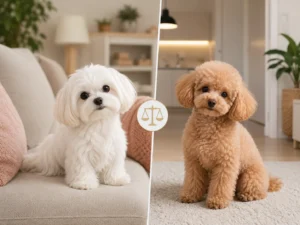

Choosing a small dog for a small home sounds simple, but the right fit depends on more than size alone. Both the Maltese and the Toy Poodle are popular choices for apartments and compact living spaces because they are smart, loving, and easy to live within the right home.

If you are trying to decide between a Maltese puppy and a Toy Poodle Puppy, this guide will help you compare their personalities, grooming needs, training style, and daily care. The goal is to make your choice easier and more practical.

Quick Comparison Table

Feature Maltese Toy Poodle
Size Very small Very small
Coat Long, silky, white Curly, soft, low-shedding
Grooming High maintenance Regular maintenance
Personality Sweet, playful, affectionate Smart, lively, alert
Training Can be a little sensitive Usually quick to learn
Best For Calm homes that want a cuddly dog Homes that want a clever, active small dog

Both breeds can live happily in small spaces. The better choice depends on how much grooming, training, and energy your household can handle.

Size Alone Does Not Decide the Best Fit

Many people think a tiny dog automatically works best in a small home. That is not always true, because personality matters just as much as size.

A Maltese and a Toy Poodle are both compact, but they bring different energy to the home. A quiet person who wants a lap dog may lean toward the Maltese, while someone who wants a bright, trainable companion may prefer the Toy Poodle.

Temperament: Calm Cuddler or Clever Entertainer?

Maltese vs Toy Poodle: Which Is Better for Small Homes?

The Maltese is known for being loving, gentle, and very attached to its people. This breed often enjoys staying close and may love sitting on your lap or following you from room to room.

The Toy Poodle is usually more alert, active, and eager to learn. It often enjoys games, tricks, and mental challenges, which can make daily life feel fun and interactive.

In simple terms:

  • Maltese: affectionate, soft, and people-focused
  • Toy Poodle: smart, lively, and quick-thinking

If you want a dog that feels like a tiny companion by your side all day, the Maltese may suit you. If you want a dog that stays busy and learns fast, the Toy Poodle may be the better match.

Grooming Needs: Who Takes More Work?

Grooming matters a lot in small homes because loose hair, tangles, and dirt can become noticeable fast. This is one of the biggest differences between the two breeds.

The Maltese has a long, fine coat that can tangle easily if you do not brush it often. The Toy Poodle has a curly coat that may be easier to manage in some ways, but it still needs regular care to stay neat.

Grooming comparison:

  • Maltese
    • Needs frequent brushing
    • Can develop tangles quickly
    • May need regular face cleaning
  • Toy Poodle
    • Needs brushing and trimming
    • Coat is easier to keep in a short style
    • Often looks best with professional grooming

If you want a dog with a lower-shedding coat, the Toy Poodle usually wins. If you do not mind brushing and want that classic fluffy look, the Maltese may still be a great fit.

Training: Which One Is Easier to Teach?

Both dogs are smart, but they learn in different ways. The Toy Poodle often picks up new commands quickly and enjoys training games.

The Maltese is also intelligent, but it can be a little more sensitive. Harsh correction can make training harder, so gentle praise works best.

Helpful training tips:

  1. Start training early.
  2. Keep lessons short and fun.
  3. Use treats and praise.
  4. Repeat simple commands often.
  5. Stay calm and consistent.

A Toy Poodle Puppy often enjoys learning tricks, basic commands, and routines. A Maltese puppy may take a softer approach but can still become well-behaved with patience and consistency.

Energy Levels in a Small Home

A small home does not mean a dog should have low energy. Both breeds need daily activity to stay happy and avoid boredom.

The Maltese usually has moderate energy. It likes playtime, walks, and attention, but it may settle down nicely inside the house.

The Toy Poodle often has a bit more mental energy. It may need more play, more interaction, and more variety in its day.

Good activity ideas for both breeds:

  • Short walks
  • Indoor fetch
  • Puzzle toys
  • Training sessions
  • Gentle play with family members

If your home is quiet and relaxed, the Maltese may feel easier to live with. If your household likes activity and interaction, the Toy Poodle may fit better.

Space Needs: Do They Really Need a Big Home?

Both breeds can adapt well to small spaces. They do not need a large yard, but they do need attention, exercise, and routine.

A small apartment works fine if you provide enough walks and play. What matters most is not the size of the home, but how engaged you are with the dog each day.

Small-home success tips:

  • Set a daily walk schedule
  • Give the dog one safe play area
  • Keep toys available for boredom
  • Use a crate or bed for rest time
  • Avoid leaving the dog alone too long

A happy small dog is not just one that fits in a small room. It is one that gets enough care and attention.

Family Life and Daily Routine

The Maltese often bonds deeply with one or two people. It may love quiet homes where it gets regular affection and lots of close contact.

The Toy Poodle usually enjoys being part of a lively routine. It often does well in homes that like training, games, and regular interaction.

Think about your day-to-day life:

  • Do you work from home?
  • Do you have time for grooming?
  • Do you want a dog that learns tricks?
  • Do you want a quiet lap companion?

Your answers can help guide your choice.

Which Breed Is Better for First-Time Owners?

Both breeds can work for first-time dog owners, but they offer different experiences.

The Maltese may suit someone who wants a gentle companion and does not mind regular grooming. The Toy Poodle may suit someone who wants a smart dog that responds well to training.

If you are a first-time owner who wants easy training, the Toy Poodle might feel simpler. If you want a very affectionate pet and enjoy grooming time, the Maltese can be a wonderful choice.

Best Fit by Lifestyle

Choose a Maltese if you:

  • Want a cuddly lap dog
  • Prefer a calm, loving companion
  • Do not mind brushing often
  • Want a dog that enjoys close contact

Choose a Toy Poodle if you:

  • Want a smart, trainable dog
  • Prefer a lower-shedding coat
  • Enjoy teaching tricks and games
  • Want a dog with playful energy

Both breeds can shine in small homes. The key is matching the dog’s personality with your lifestyle.

Final Verdict: Which Is Better for Small Homes?

If your main goal is a sweet, affectionate companion, the Maltese is a beautiful choice. It brings warmth, charm, and a strong desire to stay near its owner.

If you want a clever, adaptable dog that loves learning and stays lively, the Toy Poodle may be the better pick. It often handles routines well and brings a fun, active spirit to the home.

The best answer depends on your routine, your grooming commitment, and the kind of bond you want. Whether you choose a Maltese puppy or a Toy Poodle Puppy, both can bring joy, comfort, and personality into a small home.

One of the most common questions we receive from pet lovers is, “Where can I buy a Poodle puppy in India?” At The Barking Babies, we help families find healthy, well-socialized Poodle puppies from trusted and responsible sources.


Choosing between a Golden Retriever and a Labrador Retriever can feel like picking between two great best friends. Both breeds are loyal, loving, and known for their family-friendly nature, but they do have differences that matter in daily life.

If you want a dog that fits your home, routine, and energy level, it helps to compare them side by side. This guide will break down the key differences in a simple, scannable way so you can decide which one is the better match.

A Quick Look at Both Breeds

Golden Retrievers and Labrador Retriever puppies are two of the most popular family dogs in the world. They share many traits, including friendliness, intelligence, and a strong love for people.

Golden Retriever vs Labrador Retriever: Which Family Dog Is Right?

Still, they are not exactly the same. The Golden Retriever puppy often grows into a gentle, fluffy companion with a calm and affectionate nature, while the Labrador Retriever usually has a more energetic, playful style.

Golden Retriever vs Labrador Retriever: At a Glance

Feature Golden Retriever Labrador Retriever
Coat Long, wavy, and thick Short, dense, and water-resistant
Grooming Needs more brushing Easier to maintain
Energy Level Active but often a little calmer Very energetic and playful
Shedding Moderate to heavy Moderate to heavy
Personality Gentle, affectionate, patient Friendly, outgoing, enthusiastic
Training Learns quickly and aims to please Learns quickly and loves rewards
Best For Families wanting a softer, calmer companion Active families who want a playful dog

This table gives a fast overview, but personality and lifestyle fit matter just as much as appearance.

Temperament: Which Dog Feels Better in a Family Home?

Both breeds are known for being great with children. They tend to be patient, social, and eager to be part of the family.

Golden Retrievers often come across as more calm and nurturing. Labrador Retrievers usually bring more bounce, excitement, and nonstop enthusiasm.

If your home is busy and active, a Lab may blend in easily. If you want a dog that enjoys family time but also likes quiet moments, a Golden Retriever may feel like the better fit.

Energy and Exercise Needs

These dogs are not couch potatoes. Both need regular exercise to stay healthy and happy.

A Labrador Retriever often needs a bit more action every day. They love fetch, swimming, running, and games that keep them moving.

A Golden Retriever also enjoys exercise, but many families find their energy easier to manage. They still need daily walks and play, but they may settle down a little sooner.

Daily exercise ideas:

  • Walks around the neighborhood
  • Backyard fetch sessions
  • Trips to the park
  • Swimming
  • Training games
  • Puzzle toys for mental stimulation

If your family likes outdoor activities, either breed can be a great choice.

Grooming and Coat Care

This is one of the biggest differences between the two breeds. Golden Retrievers have longer coats that need regular brushing to stay neat and reduce tangles.

Labradors have short coats, which makes grooming simpler. However, that does not mean they shed less. Both breeds shed, and both will leave hair around the house.

Grooming comparison:

  • Golden Retriever
    • Needs brushing several times a week
    • Coat can collect dirt and debris more easily
    • May need extra care during shedding seasons
  • Labrador Retriever
    • Easier to brush and clean
    • Lower maintenance coat
    • Still sheds a noticeable amount

If you want a dog that needs less coat upkeep, the Labrador is usually easier to manage.

Training: Which One Learns Faster?

The good news is that both breeds are smart and trainable. They respond well to praise, consistency, and treats.

Golden Retrievers often want to please their people, which makes training feel smooth and rewarding. Labradors also learn fast, but their excitement can sometimes make them more distracted.

Best training approach:

  1. Start early with simple commands.
  2. Use short, positive training sessions.
  3. Reward good behavior immediately.
  4. Repeat often and stay consistent.
  5. Socialize your puppy with people, sounds, and places.

If you bring home a Golden Retriever puppy, early training matters a lot. A well-socialized puppy grows into a polite, confident adult dog.

Space and Lifestyle Fit

Your home and routine should guide your choice. A Labrador often works well for families that enjoy a fast-paced, active lifestyle.

Golden Retrievers are also active, but they may suit homes that want a balance of play and calm. They often fit well with families who want a dog that is affectionate without being overly wild.

Choose a Labrador Retriever if you:

  • Have a very active household
  • Love outdoor adventures
  • Want a playful, high-energy dog
  • Can provide lots of exercise

Choose a Golden Retriever if you:

  • Want a gentler family companion
  • Prefer a slightly calmer personality
  • Don’t mind regular brushing
  • Want a dog that is easy to live with at home

Children and Other Pets

Both breeds usually do very well with children. They are social, patient, and generally tolerant of normal family noise and activity.

Golden Retrievers may be a little more gentle in their approach, which some families appreciate. Labradors can be more rambunctious, so they may accidentally knock over small children during excited play.

They also tend to do well with other pets when introduced properly. Early socialization makes a big difference for both breeds.

Health and Long-Term Care

Like all dogs, both breeds can face health issues. They need regular vet visits, good food, exercise, and weight control to stay healthy.

A healthy lifestyle matters a lot. Overfeeding or not exercising enough can lead to problems later in life.

Helpful care habits:

  • Keep up with vet checkups
  • Feed measured portions
  • Maintain a healthy weight
  • Brush teeth regularly
  • Give daily exercise
  • Watch for changes in energy or appetite

A committed owner can help either breed live a long, happy life.

So, Which One Is Right for Your Family?

The answer depends on your home and habits. If you want a dog that is a little calmer, more cuddly, and beautiful to watch, a Golden Retriever may be the better choice.

If you want a dog with endless energy, a love for action, and a simple coat to maintain, a Labrador Retriever may suit you better.

Simple decision guide:

  • Pick a Golden Retriever if you want a gentle, affectionate, slightly calmer dog.
  • Pick a Labrador Retriever if you want a highly energetic, playful, easy-to-groom dog.

Both breeds make wonderful family dogs. The best one is the one that matches your daily life.

Final Thoughts

Golden Retrievers and Labrador Retrievers both bring love, loyalty, and joy into a home. They are friendly, smart, and great with families, which is why so many people adore them.

The right choice comes down to your lifestyle, your energy level, and the kind of companion you want every day. Whether you choose a Golden Retriever puppy or a lively Labrador Retriever, you are likely bringing home a dog that will become a true member of the family.

One of the most common questions we receive from pet lovers is, “Where can I buy a Golden Retriever puppy in India?” At The Barking Babies, we help families find healthy, well-socialized Golden Retriever puppies from trusted and responsible sources.

The Shih Tzu has earned a worldwide reputation as one of the most devoted and affectionate companion dogs. Before bringing home a shih tzu puppy for sale in India, read this blog to know why this dog breed can be your devoted companion. Unlike breeds originally developed for hunting, guarding livestock, or working in harsh outdoor environments, the Shih Tzu was specifically bred to be close to people.

This unique history has shaped a dog that thrives on human interaction and develops remarkably strong emotional bonds with its owners. Their loyalty is not expressed through intense protectiveness or constant vigilance but rather through unwavering companionship and a genuine desire to be near the people they love.

1. The Fascinating History of the Shih Tzu

The history of the Shih Tzu is as captivating as the breed itself. Often referred to as the “Lion Dog,” the Shih Tzu possesses a rich heritage that dates back centuries. This ancient breed has traveled a remarkable journey from royal palaces in China to homes around the world. Understanding its history provides valuable insight into the qualities that make the Shih Tzu such a beloved companion today.

1.1  Origins in Ancient China

The Shih Tzu’s origins can be traced to ancient China, where small companion dogs were highly prized among the nobility. Historians believe the breed developed through careful breeding programs involving dogs from Tibet and China. These small, affectionate dogs were admired for their beauty, intelligence, and suitability as palace companions.

1.2  Royal Connections and Palace Life

The Shih Tzu’s association with Chinese royalty played a crucial role in shaping its development. During various dynasties, particularly the Ming and Qing periods, these dogs became treasured members of the imperial household. Emperors and empresses valued them for their beauty, companionship, and symbolic significance.

2. Understanding the Shih Tzu Temperament

The Shih Tzu temperament is one of the primary reasons the breed remains a favorite among dog lovers worldwide. These charming dogs possess a unique combination of affection, friendliness, confidence, and adaptability. Unlike some breeds that may be reserved around strangers or highly independent, Shih Tzus generally enjoy being around people and thrive in social environments. Know more in details:

Temperament Trait Description How It Shows in Daily Life
Affectionate Nature Shih Tzus are naturally loving dogs that crave human companionship and attention. They enjoy cuddling on laps, sitting beside family members, and staying close to their owners throughout the day.
Strong Family Bond They develop deep emotional connections with their family members and thrive on interaction. Often follow owners from room to room, eagerly greet family members, and prefer spending time with people over being alone.
Gentle Personality Known for their calm and kind temperament, making them excellent companion pets. They interact patiently with children, seniors, and guests while maintaining a friendly attitude.
Friendly and Social Shih Tzus generally enjoy meeting new people and adapting to social environments. They welcome visitors, participate in family gatherings, and usually get along well with other pets.
Emotionally Sensitive These dogs can recognize changes in their owner’s mood and respond accordingly. They often offer comfort during stressful or emotional moments by staying close and providing affection.
Adaptable Nature Shih Tzus adjust easily to different living situations and lifestyles. They can thrive in apartments, houses, urban environments, and multi-generational households.
Loyal Companion Their devotion to their owners is one of the breed’s most valued characteristics. They remain dedicated to their family and enjoy being involved in everyday activities.


3. Why Shih Tzus Form Deep Emotional Connections

The Shih Tzu’s ability to form profound emotional bonds is one of its most cherished qualities. Unlike some breeds that maintain a greater degree of independence, Shih Tzu puppies actively seek close relationships with their owners. Their history as companion dogs has created a personality centered around human connection, making them exceptionally loyal and devoted pets.

3.1 Their Desire for Human Companionship

Shih Tzus were bred specifically to be companions, and this purpose remains evident today. They genuinely enjoy being around people and often prefer human interaction to solitary activities. Their desire for companionship drives many of their behaviors, including following owners around the house, seeking physical affection, and participating in family routines.

3.2 Loyalty Beyond Expectations

Loyalty is a hallmark of the Shih Tzu breed. While their loyalty may not be expressed through intense guarding behavior, it is demonstrated through unwavering companionship and emotional attachment.

3.3 Reading Human Emotions

Dogs possess an impressive ability to interpret human emotions, and Shih Tzus are particularly skilled in this area. They observe facial expressions, vocal tones, and body language to gauge how their owners are feeling.

4. Daily Habits That Showcase Their Devotion

The devotion of a Shih Tzu becomes evident through its everyday behavior. These dogs consistently display affection, loyalty, and a strong desire for companionship through numerous daily habits. Their actions often reveal the depth of the bond they share with their owners.

4.1 Following Owners Everywhere

A common behavior among Shih Tzus is their tendency to follow their owners throughout the home. Whether moving from room to room, preparing meals, or working at a desk, owners often find their Shih Tzu close behind.

4.2 Enjoying Lap Time and Cuddles

Shih Tzus are well known for their love of cuddling. They frequently seek opportunities to sit on laps, snuggle beside their owners, or relax nearby during quiet moments.

4.3 Protective Yet Gentle Behavior

Although Shih Tzus are not traditional guard dogs, they often demonstrate protective instincts toward their families. They may alert owners to unfamiliar sounds, visitors, or changes in their environment.

4.4 Separation Anxiety and Attachment

Because Shih Tzus form strong emotional bonds, they can sometimes experience separation anxiety when left alone for extended periods. Signs may include excessive barking, restlessness, or destructive behavior.

4.5 Caring for a Devoted Shih Tzu Companion

Proper care is essential for maintaining the health, happiness, and well-being of a Shih Tzu. While the breed is generally robust and adaptable, its unique characteristics require specific attention.

4.6 Grooming Requirements

The Shih Tzu’s luxurious coat is one of its most recognizable features. Regular grooming is necessary to prevent tangles, mats, and skin issues. Owners who keep the coat long typically need daily brushing, while shorter “puppy cuts” require less maintenance.

Conclusion

The Shih Tzu has rightfully earned its reputation as one of the most devoted companion dogs in the world. With a history rooted in Chinese royalty and centuries of selective breeding for companionship, this charming breed possesses a unique combination of affection, loyalty, intelligence, and adaptability. Unlike many breeds developed for work or sport, the Shih Tzu was created with one primary purpose—to provide comfort, companionship, and unwavering devotion to its human family.

One of the most common questions we receive from pet lovers is, “Where can I buy a shih tzu puppy in India?” At The Barking Babies, we help families find healthy, well-socialized shih tzu puppies from trusted and responsible sources.

Read also: Toy Poodle Temperament: Smart, Affectionate, and Lively

Maltese puppies are among the most elegant and affectionate toy dog breeds in the world. Known for their luxurious white coats, playful personalities, and unwavering loyalty, these small companions have captured the hearts of dog lovers across many countries, including India.

Their gentle nature, adaptability, and suitability for indoor living make them a preferred choice for families, working professionals, and senior citizens alike. As pet ownership continues to rise in India, more people are seeking maltese puppy for sale that fits modern lifestyles while offering companionship and emotional connection.

Maltese puppies fulfill these expectations exceptionally well. Their compact size, charming appearance, and friendly disposition make them ideal pets for urban households and apartment dwellers. Beyond their beauty, Maltese dogs are intelligent, loving, and eager to form deep bonds with their owners, making them much more than decorative lap dogs.

What Makes the Maltese Breed Unique?

Several characteristics distinguish Maltese puppies from other toy breeds and contribute to their enduring popularity around the world.

  • Elegant Appearance: Maltese puppies possess a naturally graceful appearance enhanced by their pure white, silky coat. Their luxurious fur creates an impression of sophistication that few breeds can match.
  • Compact Size: Their small stature allows them to thrive in homes with limited space while remaining easy to carry and manage.
  • Affectionate Personality: Maltese dogs form exceptionally close relationships with their families and often seek constant companionship and interaction.
  • Low-Shedding Coat: Although grooming requirements are significant, Maltese dogs shed minimally, making them appealing to owners who prefer cleaner living environments.
  • Adaptability: Whether living in a bustling city apartment or a spacious suburban home, Maltese puppies adapt comfortably when provided with adequate care and attention.
  • Intelligence and Responsiveness: Their eagerness to learn and please their owners supports successful training and socialization from an early age.

Together, these traits create a distinctive combination of beauty, intelligence, and companionship that appeals to a wide range of pet owners.

Growing Popularity of Maltese Puppies in India

The demand for Maltese puppies for sale in India has increased significantly over recent years. This growth can be attributed to changing lifestyles, increased awareness about companion breeds, and greater access to responsible breeders and pet care resources.

Growing Popularity of Maltese Puppies in India

Urbanization has encouraged many families to seek smaller dog breeds that require less space while still providing emotional companionship. Maltese puppies fit perfectly into this category. Their manageable size makes them suitable for apartment living, while their affectionate nature ensures strong family connections.

Social media has also contributed to the breed’s visibility. Photos and videos showcasing the adorable appearance and playful behavior of Maltese puppies have attracted attention from prospective pet owners across the country. Additionally, rising disposable incomes have enabled more families to invest in quality pet care, grooming, and nutrition, making the ownership of premium companion breeds increasingly accessible.

As a result, Maltese puppies have become a desirable choice among Indian pet enthusiasts seeking a blend of elegance, companionship, and practicality.

History and Origin of the Maltese Breed

Over the centuries, selective breeding refined the Maltese into the breed recognized today. Breeders prioritized maintaining the dog’s compact size, silky coat, and affectionate personality while improving overall health and consistency.

During the Renaissance period, Maltese dogs became especially popular among European nobility. Paintings from this era often feature aristocratic women accompanied by their cherished white companion dogs. Their presence symbolized sophistication, refinement, and status.

As international trade expanded, the breed spread to additional regions worldwide. Breed enthusiasts worked diligently to preserve the Maltese’s defining characteristics while adapting breeding practices to modern standards.

Today, Maltese dogs are recognized by major kennel organizations and remain one of the world’s most admired toy breeds. Despite centuries of development, they continue to embody the same elegance, companionship, and charm that first captivated dog lovers thousands of years ago.

Size, Weight, and Appearance

Maltese puppies belong to the toy breed category and are prized for their compact yet well-balanced physique. Adult Maltese dogs typically weigh between 2 to 4 kilograms and stand approximately 18 to 25 centimeters tall at the shoulder.

Characteristics Male Maltese Female Maltese
Breed Category Toy Breed Toy Breed
Weight 3 – 4 kg (6.6 – 8.8 lbs) 2 – 3.5 kg (4.4 – 7.7 lbs)
Height (at Shoulder) 21 – 25 cm (8 – 10 inches) 18 – 23 cm (7 – 9 inches)
Body Structure Slightly sturdier and more muscular Slightly finer and more delicate
Build Compact and well-balanced Compact and elegant
Movement Agile and confident Graceful and smooth
Coat Type Long, silky, pure white coat Long, silky, pure white coat
Facial Expression Alert, confident, and expressive Gentle, sweet, and expressive
Overall Appearance Slightly larger with a strong presence Smaller with a refined and feminine look

Their bodies are proportionate and graceful, giving them an elegant presence despite their small size. Their lightweight build contributes to agility and ease of movement, while their expressive posture reflects confidence and alertness.

Signature White Silky Coat

The hallmark feature of the Maltese breed is undoubtedly its stunning white coat. The fur grows long, straight, and silky, creating a flowing appearance that distinguishes the breed from many other companion dogs.

This luxurious coat requires consistent grooming to prevent tangles and maintain cleanliness. Regular brushing, bathing, and trimming help preserve its beauty and health.

Many owners choose shorter grooming styles to simplify maintenance while retaining the breed’s characteristic charm. Regardless of length, the coat remains one of the most admired aspects of the Maltese breed.

Why Maltese Puppies Are Ideal for Indian Families

Maltese puppies require relatively little space compared to larger breeds. Their small size and moderate exercise needs make them particularly suitable for apartment environments common throughout India’s major cities.

Whether residing in metropolitan areas such as New Delhi, Mumbai, or smaller towns, Maltese dogs adapt effectively when provided with proper care, exercise, and companionship.

Their ability to thrive indoors allows them to remain comfortable despite varying living conditions.

  • Singles: Provide companionship and emotional support.
  • Couples: Enhance family life and shared responsibilities.
  • Seniors: Offer affection, routine, and social engagement without excessive physical demands.

This versatility makes Maltese puppies appealing to a broad spectrum of Indian households.

Understanding the Maltese Puppy Lifestyle

Although energetic and playful, Maltese puppies do not require extensive exercise. Short walks, indoor play sessions, and interactive games generally satisfy their activity needs.

Regular exercise supports physical health, mental stimulation, and behavioral balance.

Maltese dogs benefit from activities that challenge their intelligence.

  • Puzzle Toys: Encourage problem-solving skills.
  • Training Sessions: Reinforce commands and strengthen communication.
  • Interactive Play: Provides engagement and prevents boredom.

Mental stimulation contributes significantly to overall well-being and happiness.

Key Takeaways About Maltese Puppies in India

Maltese puppies combine elegance, intelligence, affection, and adaptability in a remarkably compact package. Their beautiful white coats, loving personalities, and compatibility with modern lifestyles have contributed to their growing popularity across India.

They thrive in apartments, form strong family bonds, and require moderate exercise, making them practical companions for a wide range of households.

Final Thoughts for Prospective Owners

For individuals and families seeking a devoted, charming, and highly affectionate companion, Maltese puppies represent an excellent choice. Their rich history, distinctive appearance, and friendly temperament ensure lasting appeal among dog enthusiasts.

With proper grooming, nutrition, training, and veterinary care, Maltese puppies can provide years of companionship, joy, and unconditional love. As awareness of responsible pet ownership continues to grow in India, the future looks bright for this delightful breed and the families fortunate enough to welcome one into their homes.

One of the most common questions we receive from pet lovers is, “Where can I buy a maltese puppy in India?” At The Barking Babies, we help families find healthy, well-socialized maltese puppies from trusted and responsible sources.

Read also: Toy Poodle Temperament: Smart, Affectionate, and Lively

Instagram
Phone
Phone
Instagram